Showing posts with label books. Show all posts

Sunday, June 19, 2011

What We've Been Reading

Shanghai Girls by Lisa See

As we wrapped up on our time in China, I focused on the last few China books I'd left sitting unread. Shanghai Girls was a classic example of a book I should have read long ago. My book club in Shanghai read it together, but I skipped that month. Friend and family in the states recommended it to me, after having read Snowflower and the Secret Fan, also by Lisa See. Once I finally made time for the book, I breezed through it. See writes a compelling story, which carries two sisters through an amazing number of changes in lifestyle, landscape and self-image. I've always enjoyed author Amy Tan's writing, because she writes about Chinese women talking to their American daughters. In so doing, she explains the recent history of China in ways that I can understand and relate to. I always find the most extraordinary piece of Tan's stories to be the expansive change her characters undergo. As with many Americans who arrived as refugees, or simply escaped dangerous conditions, characters from this book lived in a world where they were well taken care of and had few worries; they then underwent unimaginable experiences before arriving to live in the U.S., shop at the same grocery store as me, and raise daughters who drink too much Coca-Cola. It reminds me that everyone I meet has a hidden story. And that recent Chinese history is awful. And that people are capable of horrible things, but that life is also redemptive. As a friend recently reminded me, this too shall pass. See tells a good story, and I recommend it for all of my readers.


Country Driving by Peter Hessler

Peter Hessler is one of the best modern writers on China. He left the place a year or two before we did, but his books neatly bookmarked our tour. I read his River Town when we first arrived in China. The book was actually published around the year 2000, but Hessler very neatly described my experience - of being lost by the culture, lost by the noise, lost by the language, lost by the characters of China. Except that by the end of the book, he could read characters and had become amazingly adept at speaking the language. Still, I identified. So when Oracle Bones came out the following year, I ate it up. It wasn't so good - a mishmash of freelance journalist's projects and friends which never fully gelled. Based on the second book, I hesitated to pick up Country Driving when it came out this year, neatly bookending our time in China. Nothing to fear - Hessler's strength in telling people's stories in China shines in this book. Once again, Hessler describes China as few foreigners can - telling very personal stories, and this time from off the beaten track. He paints a vivid and accurate picture of the China that we left behind this year.


Wild Grass: Three Stories of Change in Modern China by Ian Johnson

I love how good reads begins their synopsis of this books: "In Wild Grass, Pulitzer Prize—winning journalist Ian Johnson tells the stories of three ordinary Chinese citizens moved to extraordinary acts of courage." In the engaging style of a skilled journalist, Johnson delved into the stories of a legal clerk in the countryside who filed a class-action suit on behalf of overtaxed farmers and learned the limits of the Chinese legal system; a young architect who defended not only the dispossessed homeowners but also the disappearing architecture of Beijing; and an average elderly woman who ended up beaten to death in police custody for her faith in falun gong. After living in and reading about China for the past three and a half years, I still found the well-researched stories in this book telling me things about the country that I was naive to. But beyond telling stories which the world needs to hear, Johnson smoothly and professionally weaves in his reaction to each individual - his skepticism at times, and his frustration. A great read for a thinker, but a simple read for anyone.

And that completes my China list, until we get to the books concerning adoption - but I'm saving those for later. Anyone with recommendations for books on the mid-Atlantic and northern Virginia, I'm all ears. Although you'd better come quick - we'll know our next post by the end of the summer, and then I'll once again focus all reading attentions outside of this country.

Monday, May 03, 2010

What We've Been Reading

The hectic last few months have rather sweetly offered plenty of time for reading. Especially the last two weeks or so, where sitting on the rooftop terrace with my feet propped up has been my primary course of action. And as we see ourselves at the end of our time here, I've been focusing on our books about China. So, you China scholars, here are a few more books to add to your registers.

Unfortunately, I am running on limited brain power these days. So although I can recommend both books, I can probably not write beautiful prose on their reviews. Amusingly, I can hardly follow my own train of thought - often stopping midstream and wondering what I was talking about. We're assuming this will stop in a few days... or weeks.

The Good Women of China came out of a series of interviews by popular radio personality Xinran. This local Chinese woman lived in Beijing and had national recognition for her nighttime call-in show, leaving people with such trust of her that she had incredible access into women's stories. My mother read this book just before we moved to China, and found it horribly depressing. It is - no doubt. Although it does speak of women's strength, it also describes awful conditions and sometimes horrendous lifestyles. It is sometimes difficult to read, and is only recommended for someone with some knowledge about China. Still, Xinran tells stories which often remain untold. Too many women live oppressed lives in China - not only 25 years ago, when this book was written. And one of the ways to stop oppression is to bring it into the open. A well written book.

Wild Swans: Three Daughters of China by Jung Chang shows up on the shelves of most of the expats I know here in China. People seem to either love it or find it unfinishable. I loved it. Author Jung Chang writes this memoir of three generations of her family, covering the past decade of life in China. Through her family's incredible stories, she gives a detailed history of China since the early 1900s. Read this book because it is well written, or because it tells a compelling story about three very strong women. But more importantly, read this book because it will explain well what this country has looked like, felt like, and lived like through the past, tumultuous decade. Her personal approach helps the reader to understand many of the confusing choices people made during these times - to support the Communists, to join the Red Guards, to report on their neighbors. But it also personalizes the millions of people who lived through such difficult periods - and gives me newfound respect for so many people I now pass on the street. If you have any true interest in modern China, you must read this book.

James Fallows is a correspondent for The Atlantic, and lived in Shanghai and Beijing for a number of years as a foreign correspondent. He only returned to the US last summer, and pulled together Postcards from Tomorrow Square: Reports from China at the same time. Not a memoir, this book tells in depth some of the more interesting points of Fallows' time here as a journalist. Most interesting to Dave and I is that Fallows' time here overlapped quite closely with ours - and so the stories he tells are stories about our China. And in an ever-changing landscape, a difference of years can be quite a difference. Fallows writes well, and so this book is a simple read. He is clearly a good journalist, and so this book reports well on modern China. A good picture of today's China, I recommend this book as well.

Monday, January 18, 2010

What We've Been Reading

Whether or not the Foreign Service invites Dave to Washington this summer, our time in China is drawing to a close. Dave's contract with Uncle H-- ends on October 1. As Uncle H-- does not know of his Foreign Service plans, the time has come to draw up plans for after the completion of his contract in Shanghai and his time in China. Dave needs to decide whether to focus on an international career within his company, looking into possibilities in Brazil and Switzerland; or to focus on changing careers entirely, and simply asking Uncle H-- to move us back to Chicago this summer.

Either way, its time we read all of our books on China. This should keep each of us busy for a few months, so those seeking a complete Chinese bibliography should be pleased. I just finished two.

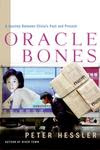
Oracle Bones by Peter Hessler

I read and reviewed Hessler's debut book, River Town, about 2 years ago. I loved the book and decided that Hessler is one of the best writers on modern China. And so I eagerly picked up his sophomore attempt, Oracle Bones, a National Book Award Finalist and a New York Times Bestseller. Hessler writes well, and I always enjoy reading his narrative style. He also does his homework, writing informative pieces based on piles of research. And thirdly, he really understands modern China. Hessler first arrived in China in the mid-90s, landing in rural Sichuan where he taught English has a Peace Corps volunteer. He learned to read and write in Mandarin, and also developed strong, trusting and lasting relationships with a number of his Chinese students. Oracle Bones displays all of these strengths, as Hessler weaves his various journalistic writings and historical research into one book. At each point, his stories are interesting to read. But I felt that the whole book lacked organization, and came across more as a haphazard collection of pieces rather than one whole. This bothered me less as I neared the end of the book, but primarily because he ended with his strongest pieces. The recent history of Chinese characters really captured my attention. For the mood of China over the past few years, this is a strong resource. For a good read, this book is disorganized and feels hectic.


Coming Home Crazy: An Alphabet of China Essays by Bill Holm

I first learned about Bill Holm's book from Hessler's bibliography. Holm traveled to Xi'an, China to teach English in the 1980s. The country was a different place then than now, and Holm well captures a particular place in a changing time. His book is more journal than story of place, and his organization feels contrived. Still, Holms is a good storyteller and he also paints a wonderful picture of what China feels like beneath the shiny glaze which Shanghai displays and the struggling superpower the international media portrays. For one individual's picture of Xi'an, China, well told and easy to read, this is a good choice.

Tuesday, July 21, 2009

What We've Been Reading

Within the span of a few days, I began and finished The Last Chinese Chef by Nicole Mones. Although not a lasting piece of literature, I really enjoyed the book and would recommend it to anyone. The author easily pulls together a few strong themes - love, loss and being an outsider. But she keeps these potentially strong themes as simple subplots, allowing the tie between food and Chinese culture to carry the book.

I know, that makes it sound like a kind of boring book. Far from it. This book was a quick read, with an easy story that has both believability and a level of suspense, without being too depressing or unrealistically perky. The story itself is good, and worth a read on its own.

For those interested in life in China, I strongly recommend this book. The author has clearly lived as an expatriate in Beijing, and easily describes life on the outside of Chinese culture - from the sleaze of too many expat men to the simple fact that a Westerner will never fully belong in China. Her insights into the food and its ties to culture are astounding, and many of them new to me. Her understanding of the local culture surpasses mine - and sensibly so, as she conducted business in China for nearly a decade.

For a good story and a good read, The Last Chinese Chef does not disappoint - no surprise, as the author also wrote bestseller Lost in Translation.

As an interesting primer of expat life in China, and on Chinese culture the book informs in an entertaining and accessible way.

Tuesday, April 07, 2009

What We've Been Reading

A friend loaned me the book Raising Global Nomads: Parenting Abroad in an On-Demand World by Robin Pascoe when she learned that we expect to live abroad for a few years still.  I dropped L-- at a friend's birthday party last weekend and brought the book to a Starbucks, where I began to read.  The first few chapters brought tears to my eyes, as I began to realize how typical my experience and my feelings are for mothers raising their children abroad.

The author defines "Global Nomads" as "anyone who has ever lived abroad before adulthood because of a parent's occupational choice."  She describes the emotions surrounding the sudden moves of expatriates, the cycle of culture shock, and the challenge of negotiating a work-life balance.

Reading this book, I began to realize that although my fears are real and entirely normal of people in my situation (fears of bad schools, unsanitary food, and unsafe medical care, to begin), they are also being overcome by people in my situation every day.  The next location will be no more (or less) difficult than this one.  The community will be every bit as strong as supportive, and likely my children will thrive.

One piece of information I did find quite interesting was the author's opinion on labeling.  She and her experts find value in labeling these children as Global Nomads, or Third Culture Kids.  The labels help children to realize that they fall into a category, and that their experiences, their emotions before and after moves, their fear of repatriation, and their general homelessness are entirely normal.  She believes that the best adjusted global nomads are those who have been familiar with the term for a long time.  Dave and I discussed this, and place it in the same category as the adoption.  At this point, we do not plan to involve Mei Mei in adoption support groups because we do not wish to identify her specifically as an adopted child.  We plan to raise her as we will raise our other children - as our child, who happens to be adopted.  We feel that the same attitude will serve our global nomads well.  We will raise them as our children - children with good brains, weekly chores, and a strong sense of family.  But as members of this family, they will be global nomads and the knowledge of that category may well do them good.

For anyone looking for insight into the roller coaster of emotions and challenges behind raising children abroad, this book is a good read.

Tuesday, February 24, 2009

What We've Been Reading

A recent request made me aware that I have been over 1 year tardy in posting what we've been reading.  China's history, culture and rapid development continue to fascinate both of us, as well as plenty of prolific authors.  So, here's a list of the good books we've read over the past 2 years.

Previously reviewed:
Death of a Red Heroine by Qiu Xiaolong, a simple police detective story set in modern Shanghai.
River Town: Two Years on the Yangtze by Peter Hessler, a fascinating and wonderfully written memoir of Hessler's time as  Peace Corps volunteer.  Possibly my favorite non-fiction on China.
China Road: A Journey into the Future of a Rising Power by Rob Gifford, Hessler's rival for my favorite non-fiction on China.  Also fascinating and wonderfully written, Gifford travels across China chronicling the modern rise in the daily conversations he has.
The Good Earth by Pearl S. Buck, a classic in modern literature, this book tells the story of a peasant family and makes rural Chinese culture beautifully accessible to the Western reader.
The Three Daughters of Madame Liang by Pearl S. Buck, written decades later and set in the middle of this century, the protagonists are a patriotic Chinese family with Western experience, this time making mid-century China accessible to the Western reader.

New Non-Fiction:
Behind the Wall: A Journey Through China by Colin Thubron.  Thubron travels China in the early 1980s, one of the first writers allowed into the country.  He chronicles his experiences and conversations in the newly opening country - this story can not fail to be interesting, in a land so full of change.
Riding the Iron Rooster: By Train Through China by Paul Theroux.  Theroux does a comparable trip to Thubron, traveling through China in the early 1980s - but he writes a much more compelling book.  Theroux both speaks and reads Mandarin and clearly loves the Chinese people and their culture.  A travel writer known for his curmudgeonly observations and never seeming to enjoy his trips, Theroux clearly loved every moment he spent in China.  His travels cover much of the country, describing diverse geographies and peoples.  And from my experience, every description of his is spot-on.  Hands down, this is the best travel writing on China.  Apparently Theroux recreated his trip recently and a new book has been published - I read the one published in 1988.
1421: The Year China Discovered America by Gavin Menzies.  Menzies does impeccable research on a relatively unknown subject - that the Chinese knew the world was round and had visited most spots on the globe long before the Europeans discovered any of it.  A very interesting topic, and a very interesting book for the first few chapters.
Life and Death in Shanghai by Nien Cheng.  A dramatic and piercing memoir, Cheng details her persecution both by the Chinese government and her neighbors during the Cultural Revolution.  Amazing in its detail and shocking in its truth - this book explained China under Communism in a way that I had never read.  Emotionally, a difficult read - but one that I highly recommend.
Factory Girls: From Village to City in a Changing China by Leslie Chang.  Chang began researching her book as a newspaper reporter and clearly found her protaganists so compelling that she devoted herself full-time to their research.  She enjoys her subjects and enjoys comparing their plight to that of her migrant great-grandparents, and now-American parents.  Had the book been 1/3 the length, it would have been fantastic.  Another one worth reading, and worth putting down halfway through.

New Fiction:
The Joy Luck Club by Amy Tan.  Tan is a beautiful author, and her books are well worth reading on their own right.  They also teach Chinese culture in a tremendously powerful way - through a Chinese parent (or aunt) telling her story to her American daughter.  The aunts explain the protagonist's history in their own voices, and in a way that the American daughter fully understands.  Tan chronicles life in a Chinese-American family, and in so doing makes Chinese culture accessible to all American readers.
The Kitchen God's Wife by Amy Tan.  All of the above is true for this book as well.  What I found particularly compelling about this book was its period of history.  The mother in this story lived through the Civil War and Communism in China, and told her story in a very personal and beautiful way - made even more powerful by the comments and questions of her American daughter.
Snow Flower and the Secret Fan, by Lisa See.  Set farther in history, See tells the story of women and foot-binding in rural China.  A lovely story of friendship and womanhood, See describes the process of foot-binding and the choice to bind one's child's feet in a very real way.  The author makes me begin to understand the choices these families faced, and the challenges and joys these women faced in their society.

Monday, June 16, 2008

What We've Been Reading


The Joy Luck Club, by Amy Tan

I was in high school when the movie came out. Never particularly interested in history, I flagged this one as boring and never thought twice. Fifteen years later, the book crossed my table and only because I am living in China did I pick it up. But am I glad I did. Amy Tan is a beautiful story teller and I read the book in a few lightning days of reading every chance I got.

Doing a quick bit of internet search for this post, I learned that Cliff Notes has made a guide to the book, as have many others - including the author herself. It comes as no surprise to me that Amy Tan is one of modern literature's heavy weights. But although I'm a sucker for a talented writer, I read purely for the story and the characters. Tan builds a few strong characters throughout the book, but in a unique style. Telling each individuals' story, and interweaving them chapter and chapter, she builds strong characters throughout the entire book while presenting a series of short stories. And having only this year learned of China's appalling recent history, these stories of normal Chinese-American women overcoming horrible circumstances are immensely interesting. An added bonus is reading an intimate story in China written from an American's perspective - no doubt, this combination made the book that much quicker of a read. I highly recommend this book, whether for its presentation of Chinese recent history, or just for a fantastic read.


National Geographic, May 2008

May's issue of National Geographic focused on China, and highlighted some of the best authors I've read recently. Peter Hessler began and finished the the magazine, with a piece by Amy Tan and plenty of recognizable local photographers.

Too often, current international magazine articles only tell surface information. Too often, I could have written the stories myself. And way too often, I could have corrected the stories as well. But National Geographic delved into architecture, the environment and small town China in both deeply and well. It reads easily and, if you can still find it, is worth a purchase to bring yourself up to date on China in 2008.

Friday, January 11, 2008

What We've Been Reading

I'm way behind on book reports, but have read some wonderful books on China over the last few months and will share a brief review of each so you can add them to you Wish Lists.

China Road by Rob Gifford
A self-confessed NPR junkie, I bought the book after hearing Rob Gifford discuss it on the Diane Rheme show. That I had listened to his original reports on NPR as he crossed China in preparation for the book piqued my interest, but his conversation with Diane at a time when I was preparing to move to Shanghai myself sent me to the bookstore that very day.
At the end of his time living in Beijing and covering China for NPR, Gifford elected to make a cross-country trip as his farewell to the nation. Reviews in China have said that he talked to peasants and many of the interesting people in China, rather than spending all of his time with the newly rich and the expatriates. His conversations with people were enlightening and personal, making the Chinese seem not so different from ourselves. His tangents on Confucianism, Mao and the future of quickly-growing China are all thought provoking, placing the current Chinese scenario in its context. But they are also well placed among well written prose and good-old story telling. When I finshed the book, I felt as if I had just sat down to dinner with Rob and listened to him tell me his stories and his opinions. I liked it so much, I chose to read it again. This is rare in my library. For those at all interested in China, China Road is a must read.

The Good Earth, by Pearl S. Buck
I give Rob Gifford credit for describing the peasants of rural China as ordinary people to whom a westerner could relate. But I must give credit where credit is due. The Good Earth earned Pearl S. Buck her fabulous, and well-deserved reputation for writing about peasants in China, living lives far different from those in the United States. And yet reading this book, I could understand how they felt and how they made the choices they did. I could place myself into those vastly different lives and get a glimpse of life as a peasant in rural China at the turn of the century. Good story? Check. Good writing? Check. And I don't read for symbolism, although I know this book is chock full of it. But just that I could identify with someone whose life so vastly differed from mine felt good, and I (along with the Nobel Institute) give Pearl S. Buck loads of credit for that.


River Town by Peter Hessler
I'm only just into this book. Hessler wrote a memoire of his time as a Peace Corps volunteer in one of China's lesser known but still very large cities, far west in Sichuan province. His experience was much more extreme than ours - he and his compatriate were the only two foreigners in their town and were left entirely on their own to speak English and figure out how to maneuver their newly Chinese lives. As far as I am in the book, I am identifying with his struggles with pollution, noise and the learning to speak and understand Chinese. And my challenges pale in comparison to those he faced, which is comforting. Hessler is a good writer, painting a compelling and certainly factual picture of China in the mid-90s, and I find it interesting to note the changes and similarities between both his time period and mine, and his city and mine. If you love a good memoire, good travel writing, or just good writing, I highly recommend River Town.

Monday, October 15, 2007

What We've Been Reading - The Three Daughters of Madame Liang


It was only upon accepting the job in Shanghai that I discovered the writings of Pearl S. Buck. A Nobel Prize winner for literature, her stories are captivating; her characters are realistic, well developed and identifiable; and her settings are infinitely interesting. My mother handed me Peony in March, and I was immediately hooked on Buck's writing. I searched a used book fair this summer for more, and left with a pile of Buck's novels. My second read was The Three Daughters of Madame Liang. Both novels take place in China - it is my understanding that most of her writing does.

What stands out about The Three Daughters of Madame Liang is the timeframe. Although I can't find the reference, I believe that Buck stated that this book takes place in "modern times" - it was published in 1969. I include myself as one unfamiliar with Chinese history, although I am learning as quickly as I can. At that time, under the leadership of Mao Zedong, China was in the midst of the Cultural Revolution. Being in China, the best link I can find for background is this piece on Mao Zedong. It seems relatively accurate, if a bit slanted. I suppose this is why I am able to read it under my present circumstances - in cooperation with most major search engines, the Chinese government controls the masses' access to the internet, removing or blocking links to websites presenting Chinese government in a less than favorable light.

I digress.

Madame Liang is a surprisingly progressive woman in communist China in the midst of the Cultural Revolution - a dangerous time for all Chinese, especially progressive ones. She is Chinese through and through, but has educated all three of her daughters in America. Through the course of the book, some of her children come back to China to serve their country. The time period is immensely interesting - masses of people living under complete oppression, with every aspect of their lifestyle under govermental control. With her choice of characters, Buck does a beautiful job of presenting a loyal Chinese viewpoint as well as American critical thinking. For a wonderful read, as well as a fictional schooling on mid-20th-century China, I highly recommend this book.

What We've Been Reading - Death of a Red Heroine


With Death of a Red Heroine, author Qiu Xiaolong stepped away from published poetry to write a detective novel - apparently a very popular type of book in modern China. The author has received acclaim for the novel, and I've read many good reviews of the book. Detective novels are not generally my style, and this one meets many common shortfalls - the book is longer than the story, the mystery is simple to solve, and most characters are poorly developed.
Still, if you enjoy a good crime novel, I would recommend this book on two counts.
First, although most of his characters are poorly developed, the two main characters are quite interesting. Chief Inspector Chen and his assistant Detective Yu are both realistic and well developed characters living realistic and different lives in modern China.
Second, and my reason for reading the book, is Xiaolong's masterful portrayal of modern Shanghai. The book is set in Shanghai in the early 90s, and although many things have changed over the past 15 years, many of Xiaolong's descriptions are dead on. To quote the website cited above:
"Set in Shanghai in the 1990s, Death of a Red Heroine is replete with the smells, the sights, and the sounds of this great Chinese city: a former brothel quarter has been converted to work-unit dormitories where none of the residents will take responsibility for cleaning the bathrooms; on the overcrowded buses, people's tempers are short; little neighborhood restaurants serve delicious fried buns; and as they practice tai chi along the city's elegant Bund, local residents ignore the crowds of tourists and financiers passing by."
For an accurate portrayal of the city we've moved to, viewed through very different eyes from my own, I recommend this book.

Monday, August 06, 2007

What We've Been Reading - Fried Eggs With Chopsticks


Following in the tradition of travel writer Paul Theroux, Polly Evans is a malcontent and never seems to enjoy her travels. However, where Theroux is a charming curmudgeon who shows a vast knowledge of his surroundings and a strong interest in the local people, Evans is a whiner who has very little respect for Chinese people and their culture.

A quick read, Evans visits many places where the scenery sounds amazing. She makes China sound beautiful and inspires a definite respect of ancient culture. However, the author conveys that traveling through China is a miserable experience, from the modes of transportation to the people she meets. Her lack of respect for the Chinese cultural construct of face makes her seem quite the Ugly American -or Ugly Brit, in this case. I do not recommend this book.

Friday, August 03, 2007

What We've Been Reading - Living Abroad in China

Living Abroad in China

The first book we read once we accepted the position in China, this title appears early and often in advice forums. We both read the book cover to cover within 2 weeks of purchasing it (this is fast for us). We went through with hi-liters. We made notes. We brought it with us to stores and doctor appointments. This is a great book.

The authors seem down-to-earth in their approach to life in a very foreign country. They're seeking adventure and more than willing to break out of their comfort zone, so they highly recommend learning the language and traveling. But they're not interested in making themselves and their family miserable, so they provide recommendations of what to ship from home and how. The authors made the move from the Midwest to China with two young children, so their viewpoint often hit home for us.

Probably of very little interest for people not planning a change of address, I highly recommend this book for anyone seriously considering moving to China.